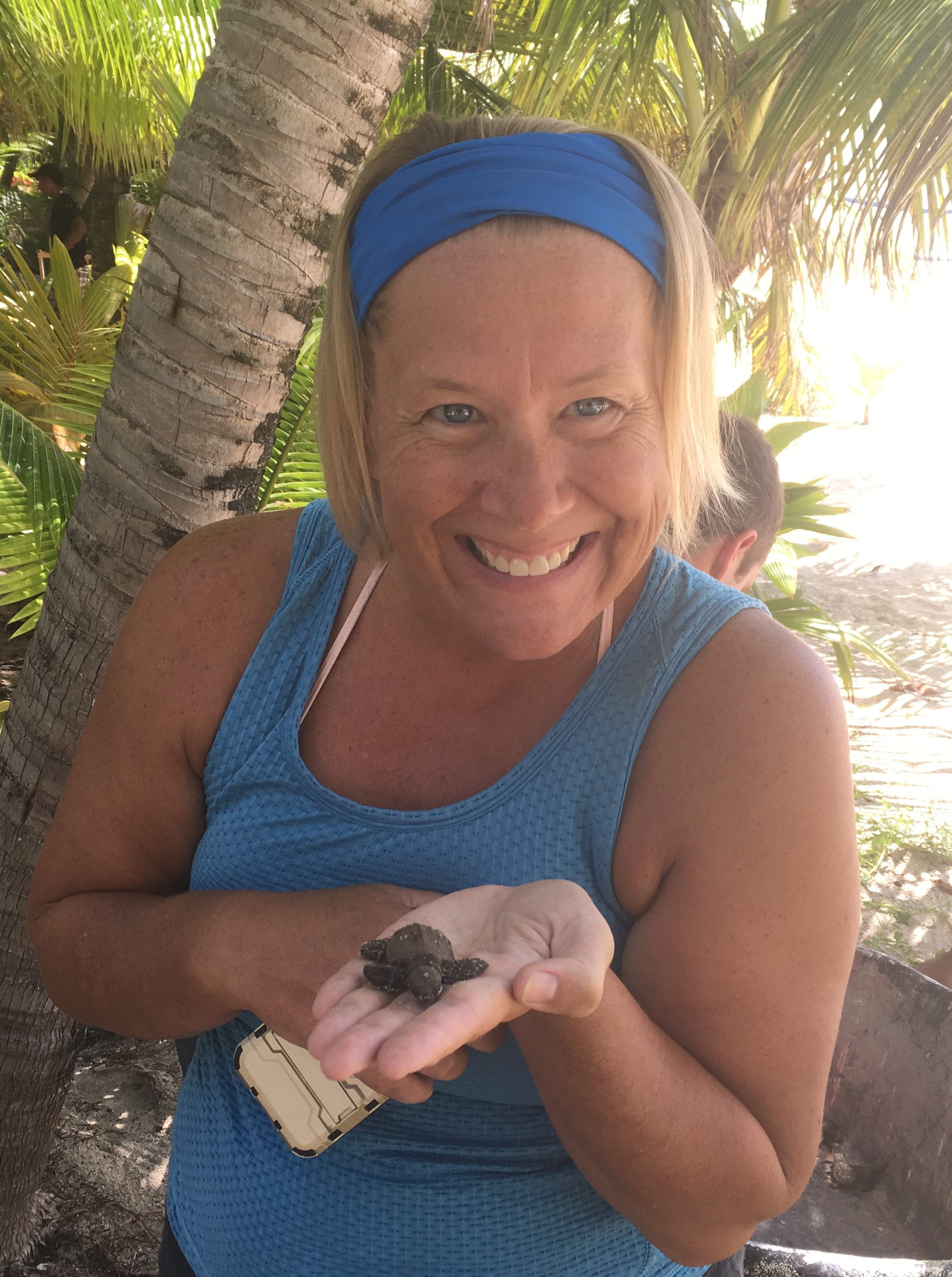
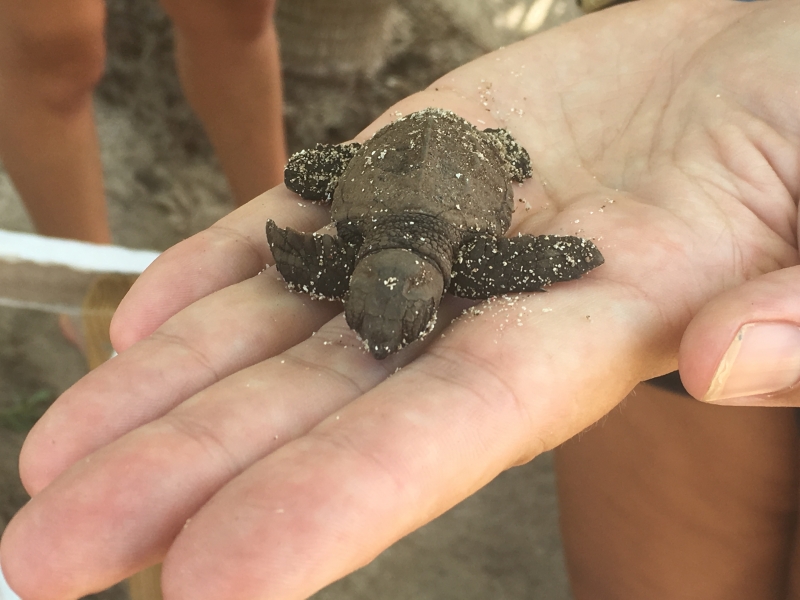
NEWLY HATCHED HAWKSBILL TURTLE
Last year was an amazing year at Ranguana Caye. Max and I were fortunate to be the managers of this Belizean jewel. Situated in the southern region of Belize, Ranguana lays 20 miles offshore east of Placencia. My commute was an hour boat ride out and an hour back. Luckily, Ranguana has 3 Cabanas for overnight guests so I get to stay out here 3-4 nights a week. Even more exciting when Max joins me!
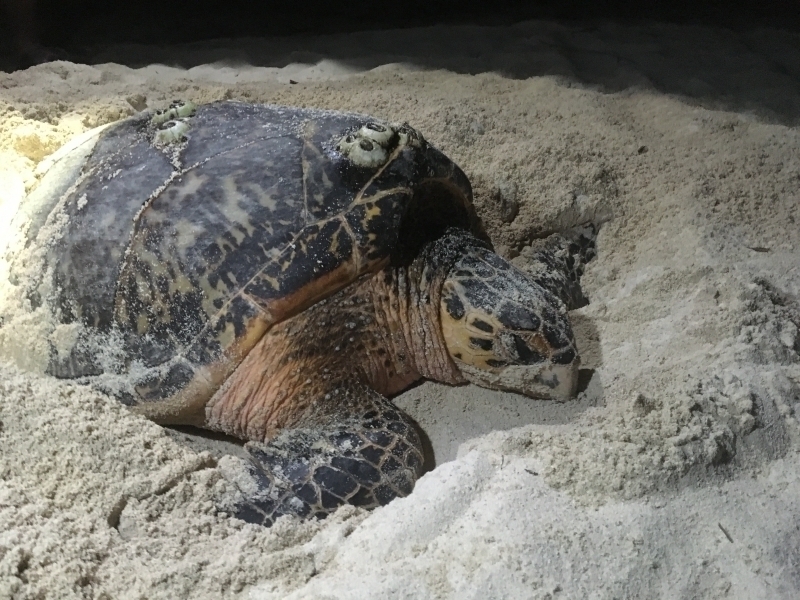
SHHHH! MAMA IS LAYING HER EGGS
Starting in June, 2016, we had our first turtle egg laying of the year at Ranguana. One of my staff woke me up late at night to let me know a large Hawksbill turtle had come ashore and is digging a test nest. She crawls over the island testing the sand to see where she wants to lay her eggs. Finally, an hour later she digs deep then lays over the hole and starts laying. It takes a lot of patience to wait for her to find her spot and then nestle in. I sat next to her and watched with my iPad. Awesome! I dug out more of the hole from the side and took pics and videos of the eggs laying. You would think it would bother her but once she is laying she is in her zone. The first turtle laid 138 eggs. So cool to watch. It was a lot of work on her part and she looked exhausted when all was done. She then covers the hole over and moves slowly back to the sea.
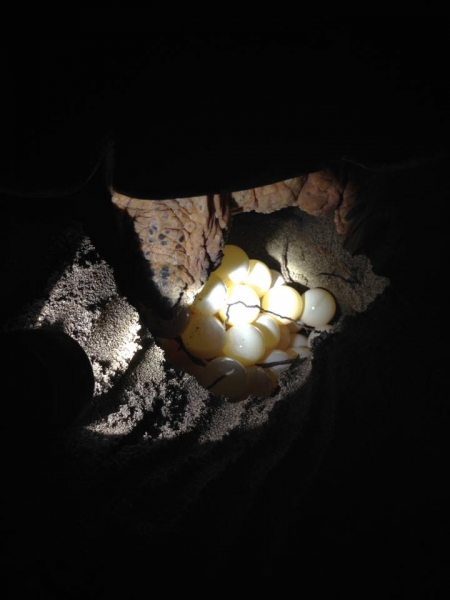
EGGS BEFORE BEING COVERED
In the morning we made a fence around the nest and with a label we marked the date. 60 days later we will expect a hatching. This was my first experience watching the turtles come ashore and lay.
Sure enough, after witnessing 5 laying’s and 4 hatchings last year, it is pretty much 60 days from laying to hatch. The largest nest had 158 eggs. An average was 140 eggs. The laying was done at night, sometimes just after sunset. But the hatchings happen any time – during the day or during the night. It can be on a full moon, on a half moon, or at different times during the month – it does not seem to be a set time of the month. When they pop up through the sand during daylight hours we put them in a wheelbarrow with wet sand until evening. Then we put them back on the beach so they can find their way to the sea by themselves. Doing this at night saves a lot of the young turtles from getting dive bombed from the birds during the day.
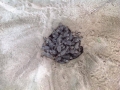
BREAKING THROUGH THE SAND
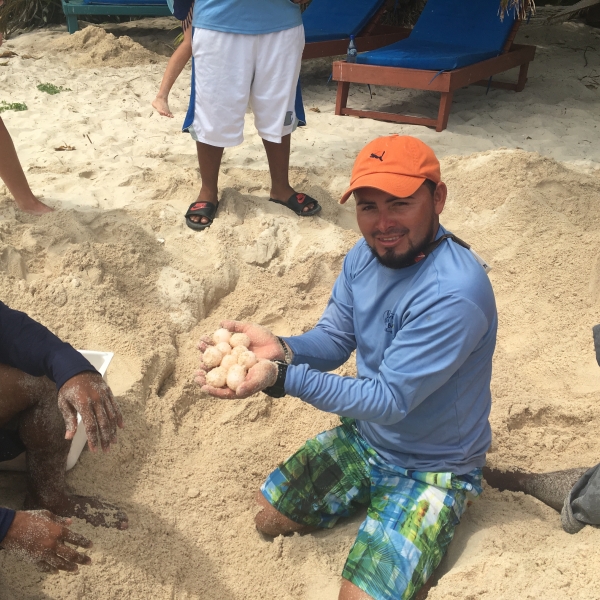
DIGGING UP EGGS LOCATED TOO CLOSE TO THE WATER
One evening we saw a turtle slowly come out of the water and moved about 30 feet over the beach, dug a hole and layed. She was ready and wasn’t messing around! After she headed back to the water we knew the eggs were too close to the water and would be destroyed with a high tide. So the next day we dug up the nest to relocate the eggs. 60 days later this particular nest had 128 new little guys hustling out to sea.
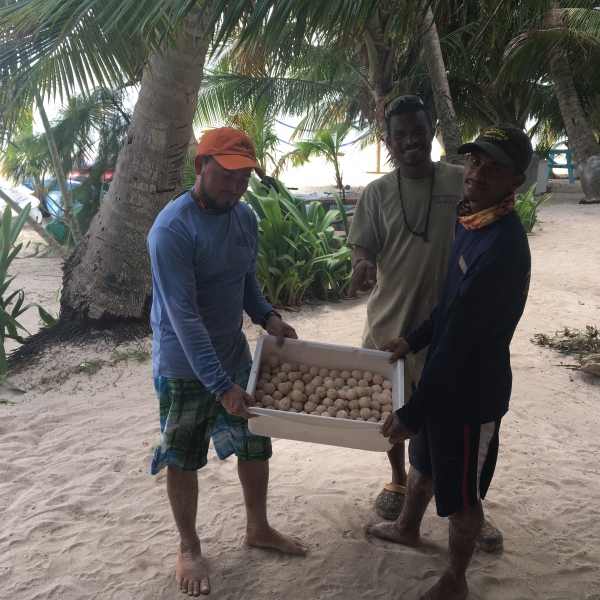
AND RELOCATING THEM
We did discover that we missed 4 nests that we did not know were there until they hatched. One day we were all on the beach playing a game of volleyball and over by the bar, the sand started shifting. Another 134 little guys popped out and started for the water. The last hatching was in December when we thought the whole laying season was over.
It was a great year for Ranguana Turtles. 16 nests and nearly
2,000 turtles hatched. All of them were Hawksbills.
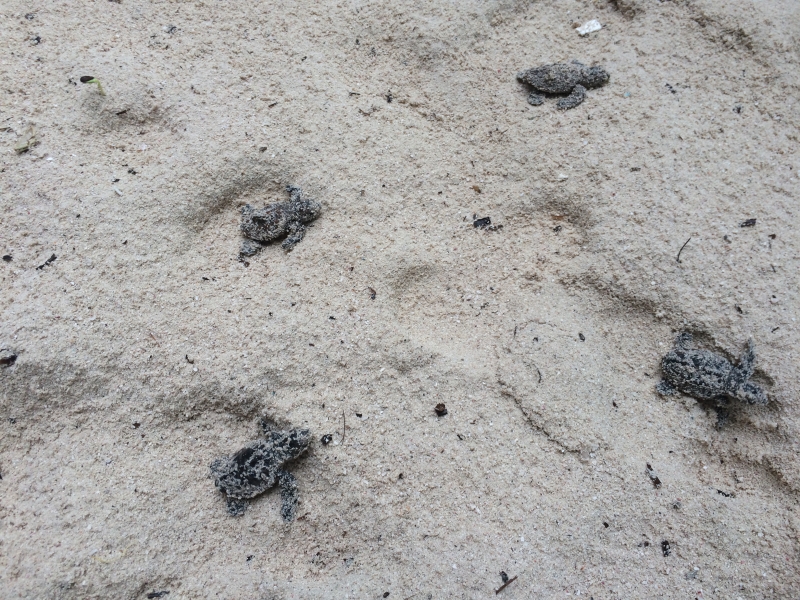
HUSTLING TO THE SAND ON THEIR OWN
We were all wondering what happens next. They scurry into the sea and what? Do they hang around? Do they just go? We were fortunate to talk with a crew on a sailboat that stayed one night on one of the mooring balls. They told us that all morning there were lots of baby turtles just swimming around their boat. I had visions of not many of them surviving the first night but now we know that they do. Where they go from here I don’t know but in about 25-30 years from now the females will return to Ranguana Caye and make their own nests. (Yes, it is true. They will remember where they were when they first entered the water.)
We have been in contact with Linda Searle in Belize City who monitors all turtle hatching throughout Belize. She is discussing getting some satellite trackers to monitor some of the little ones to see where they swim off to.
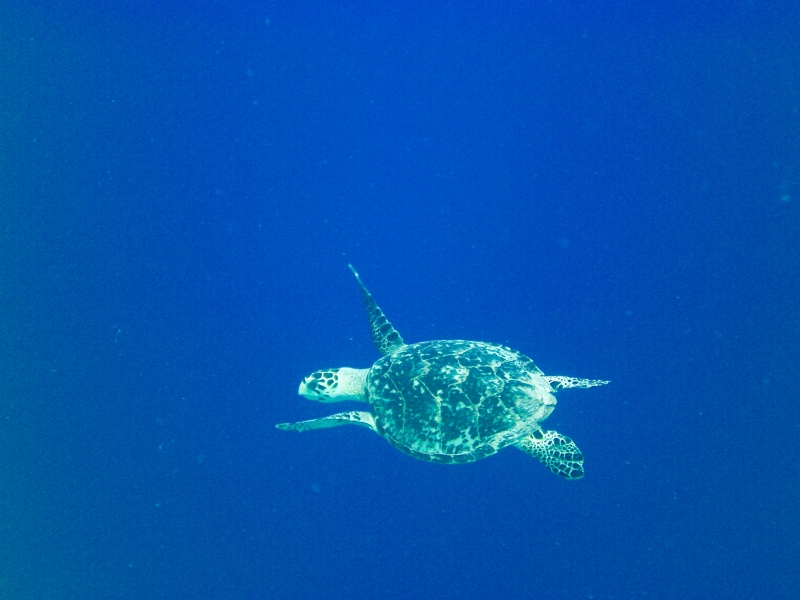
WHEN THEY ARE GROWN
I will keep you posted on the new batch this year.
(Main picture is our friend. Linda Sue, who was luck enough to see many of the turtle hatchings last year.)